Social media and chat platforms facilitate our connections to family and friends. New innovations in music and video streaming, as well as wearables and augmented reality technologies, have changed how and where we expect to be entertained. And of course, technology plays an ever-greater role in how we do business and stay safe.
A nationwide portfolio of towers.
The connective thread in all these transformative technologies is our nationwide infrastructure. Our towers, in every major US market, enable communities like yours to help you stay connected to what matters most. We involve your local community and government leaders in every step of the process—ensuring that your connectivity needs are met, and that you can continue to live life the way you’ve come to expect for many years to come.

Our infrastructure brings important benefits to your community.
Increased safety.
When there’s an emergency, the closest, most convenient phone is almost always a mobile device. So it’s no surprise that in many areas, 80% of 911 calls are made wirelessly. And once that call is placed, police officers, firefighters and other emergency personnel need a secure, dedicated wireless broadband network to coordinate with one another and get the information they need to respond quickly and appropriately. But safety isn’t just about 911. It’s the peace of mind of knowing that a child or loved one can reach you when they need you. It’s getting a flat tire and being able to get through to roadside assistance on the first try. With improved communications infrastructure, you can rest easy knowing that you’ll always be a tap or a screen away from the things that matter most.
More reliable connections.
Whether you’re tracking your morning run, catching up on office email or pulling up a video clip from last night’s game on your phone, you want your technology to work. When calls drop, or data doesn’t load, those are missed moments you may never get back. Solving this problem requires infrastructure where you need it most.
Ready for the future.
The introduction of high-speed wireless connectivity is ushering in many promising new developments. Smart devices and wearables are changing our relationship to technology. Self-driving cars have the potential to make roads safer and cities less congested. And smart city technologies will bring new efficiencies and innovations to communities around the country. These advancements come with lots of promise, but will your community be able to support them? Even if your wireless service seems fine today, new infrastructure will be required to bring you these new opportunities. That’s why we’re continually assessing the location and quality of our assets.
Learn more about how we're committed to working sustainably and ethically in your community.

Community voices.
Rob City Sustainability DirectorIt's not just the technology and the connectivity but it's the jobs, too.

Lyndon University ProfessorMobile technology gives me a sense of freedom in that I don't have to sit next to my phone.

Kari Real Estate AgentI use my phone as my lifeline to get my job done. It's my office, my touchpoint for my clients and everything that I'm doing.
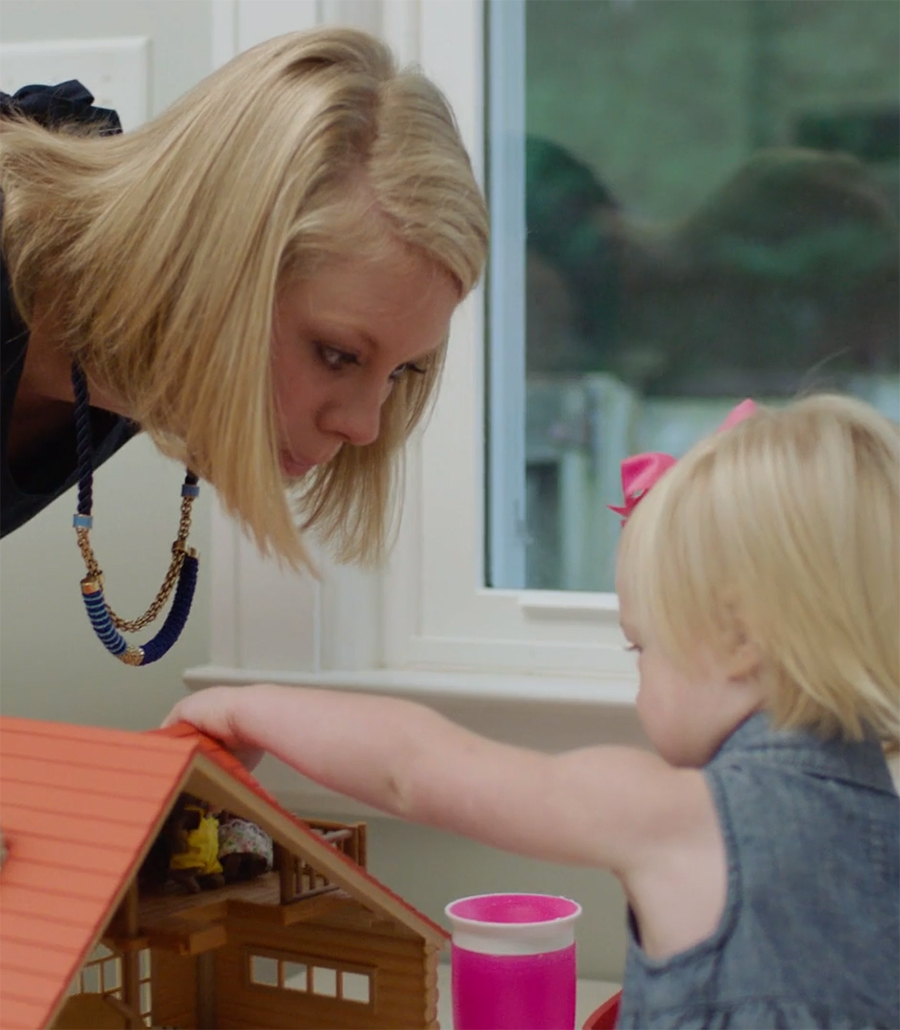
Andrew EntrepreneurWe're really a very mobile business—I don't think we would run nearly the same without it.

Answers to frequently asked questions.
We are one of the nation’s largest providers of shared communications infrastructure—with approximately 40,000 towers nationwide. This plays an important role in making sure communities like yours can support the data, technologies and wireless services you rely on every day, while paving the way for tomorrow’s innovations. We do all of this through close partnership and cooperation with wireless carriers, telecommunications providers, municipalities, enterprises, utility companies and landowners.
We are neither a wireless provider nor a content provider. We build and maintain the infrastructure that works to bring connectivity to people, businesses and communities across the country. We work closely with wireless carriers, businesses, technology companies, governments and communities to design and build solutions that meet their unique connectivity needs.
As people use wireless devices for more data-intensive tasks like streaming video, social media, gaming and more, network congestion is becoming an issue throughout the country. It’s not unlike cars trying to crowd onto a busy interstate. Adding new infrastructure is the equivalent of adding new lanes—it’s how we add capacity, and it gives all that extra data a place to go.
The bars on your phone are an indicator of signal strength and coverage, which is one important factor that contributes to a good wireless experience. However, capacity—the amount of information or data that the network can carry—is not reflected in the bars you see on your phone. As smartphones and other connected devices stream more video and consume more data, many wireless networks are constrained not by a lack of coverage, but by a lack of capacity. To learn more about coverage and capacity, click here.
We’re surrounded by safe electromagnetic emissions, sometimes called radio frequency emissions, from wi-fi, Bluetooth, radios, lights, cell phones and other sources. They are safe because they are non-ionizing and they are low-power. Power levels for wireless communications are tightly regulated by the Fedreal Communications Commission (FCC). We routinely analyze our small cell installations to verify that all RF emissions from deployments are below FCC limits. “Scientific consensus shows that non-ionizing radiation is not a carcinogen and, at or below the radio frequency exposure limits set by the FCC, non-ionizing radiation has not been shown to cause any harm to people.” US Food and Drug Administration
We encourage those with concerns to seek out one of the many reputable and independent scientific studies that have been conducted around RF, including those from the Federal Communications Commission (FCC), the International Commission on Non-Ionizing Radiation Protection (ICNIRP) and the World Health Organization.
5G, the next generation of cellular networks, builds on 4G. Studies show that cellular signals are safe and, just like 4G, 5G emissions are similar to those from everyday technologies like TV, radio, wi-fi—even your toaster. To learn more about the safety of 5G, click here.